Running from home (or towards?)
- Published on
- 13 min read
Being away from home is like going for a run.
I've been gone for a long-distance run this time - almost 1.5 years now.
Start
When you leave home it's like starting the marathon race among the crowd - you see everyone as prepared (or even more) as you are and yet you still hope to win the race. The gun fires and on you go - you start running, following the crowd surrounding you. There are some tips and advices on how to run a marathon - the one I related to is when they tell you to not rush at the start. Sure you may be very energetic from the fresh morning air, feeling like you are going to pass everyone in an instant and lead the race (and you can do that too). When I tried it, however, I first felt good coming up to the lead of the race at the start but eventually I slowed down and let almost everyone pass me over the whole duration.
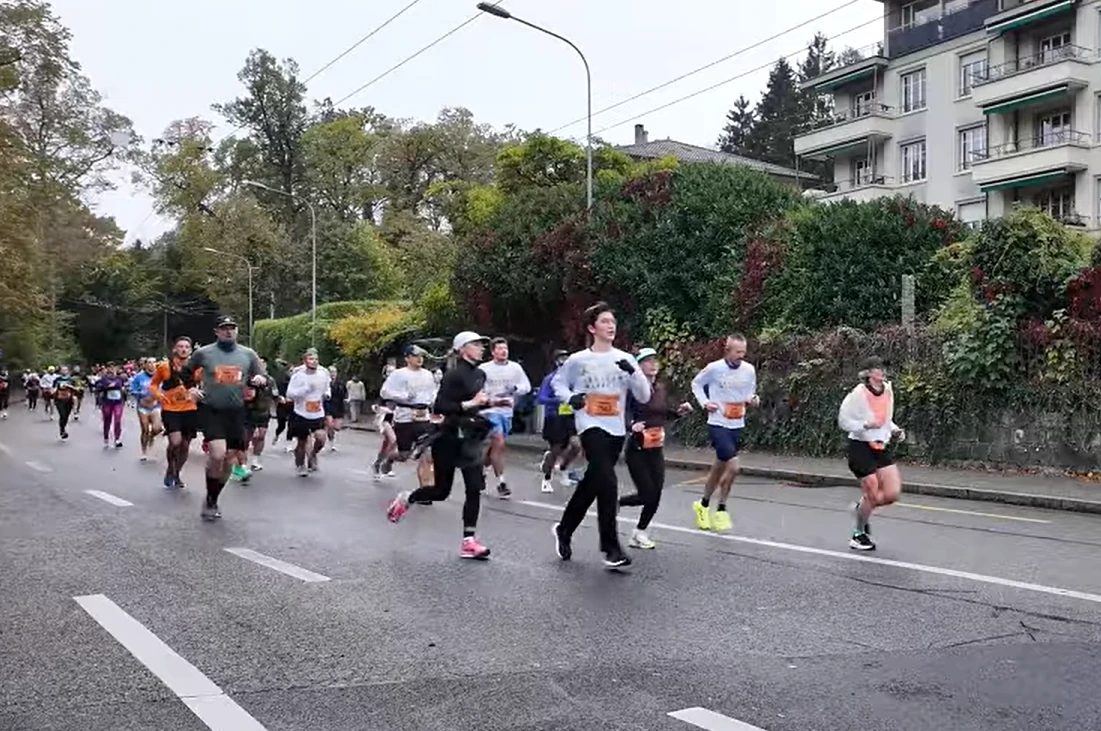
I believe same applies when you decide to run from your home. You may feel like you can conquer the world, like you are capable of anything you are going to face and you can do that too - initially, that is. You should, however, be careful not to give it all out at the start, the long-distance runs prioritize testing your endurance before your speed (you need to FINISH the race before you can finish it FIRST).
Leaving the comfort zone
In the first few kilometers after starting intense (up to 7-8kms of the whole 21km in my case), I thought I would not last the entire distance and just drop out at the half (10-11km mark). The fatigue and laziness had emerged. I thought of how comfortable I was just in the morning, wrapped in my blanket. I thought of the nice meal I had for a dinner of the day before. I wanted to return to that blanket, wanted to have that meal again. That was my comfort zone and I was glad to have reached the state where I could recognize and define the boundaries of my comfort zone - at that stage I was certainly going further from it.
Same applies when you leave home - you go to a whole different country, different people, may be a different language, different set of rules, laws, social standards, etc. Then you think how easy it would be for you if you just stayed at home - you would not have to learn a new language, would not have to adapt to new rules, standards, would not have to force yourself to go out and try making friends. That's where your comfort zone is defined and this is when you leave your comfort zone. Whether it's a good thing or bad is a personal judgement. I myself think leaving comfort zone is always a good thing. Sure, the potential for you to leave your comfort zone exists at anytime - if your comfort zone is defined by you sleeping until 9am in the morning you can still wake up at 5am and take a walk. You recognize this is indeed very easy, accessible action for 'leaving your comfort zone'. Yet even though it's accessible and easy to do, actually DOING it is some other story. You can have a potential method to leave the comfort zone but you need a certain push to execute that method - without that push the method stays as just a potential. Going deeper to ask the question 'Why leave the comfort zone in the first place?' would result me answering 'Because it's where you grow'. Leaving comfort zone does not always mean that you will eventually return to it. Sometimes you go out of the circle you were living inside and take up a bigger circle as your comfort zone - that's the growth process. Next time you wander around that bigger circle you won't have to dream of going to back to that earlier little comfort zone you had because you are already comfortable in the bigger one. A french muslim friend has stated the meaning of life (from his perspective) is to go through pain. I think it's the same idea - you go through pain by deciding to grow and vice versa: if you want to grow, you have to go through pain. Now to account for the thought I had ('I will go until 10km and drop out mid-way') - when I left home I must have said that I'll just go through this semester and go back home (or I'll just graduate from this university and go back home). Yet somehow I stayed abroad for more than one semester (maybe I will stay abroad for more than just undergraduate).
The Flow
After reaching the 10km mark, however, I didn't stop as I thought I would. Maybe it's because I saw no one else stopping there - everyone else just turned back and kept running towards the 20km mark. So I thought: 'Maybe I can keep going for a little more'. And I did. At that point my legs were just moving on their own and the only effort I had to make was staying awake and conscious. This is what I call 'The Flow State'. I learned about it from the anime 'Blue Lock':
This is a state of mental immersion acquired through one's own optimal experience.
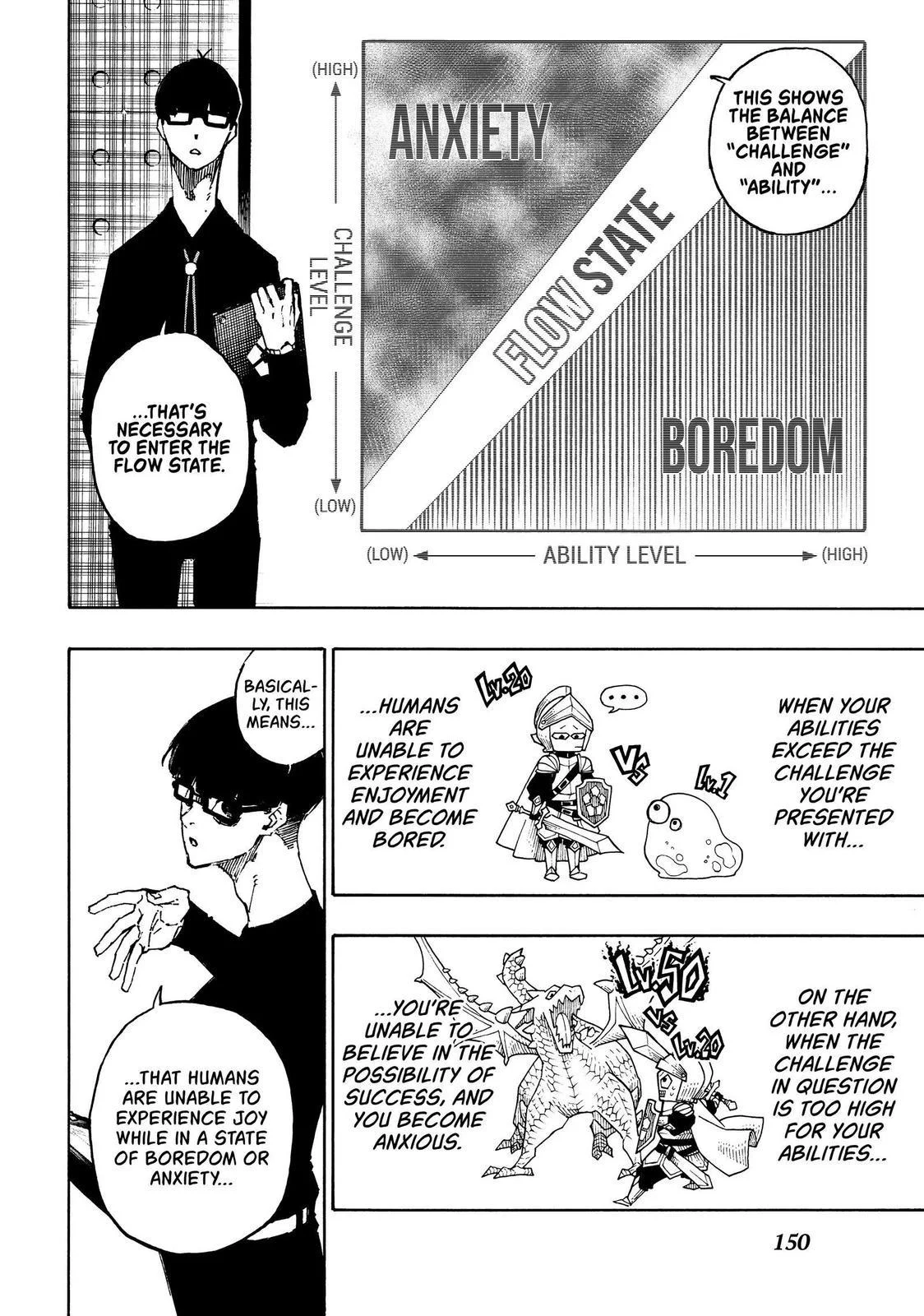
Similar must have happened in staying abroad experience as well. After staying the summer at home (over 2 months) I certainly concluded that home was boring - sure, relatives, parties, friends, etc. but no progress - I sort of missed the studies I were doing back in my university program. Yet after going back to South Korea and starting the classes again I was afraid that I can't get the perfect GPA (4.3/4.3 in our case) by competing with top-notch Korean talents. So I stayed somewhere in between - that's what might have been the flow for me. The observable fact is that I stayed for about a year in South Korea with the thought: 'Maybe I can keep going a bit longer'.
The Test
At 17km I was already checking my Strava each 3 minutes - seeing how far is left. I was still tired, fatigued, I was still thinking of the nice dinner I had the day before. But the thought 'I came this far, let me not waste it' kept me going. At around 19.5km I was intensely tired, even lifting my shoes felt like a big effort (shoes got heavier from the absorbing the rain). All I needed to do was to run 1.5km and reach 21km mark, therefore completing the half marathon requirement (it's actually 21.0975km to be precise, but the mind was not so keen on getting the details right at the time). Yet I got angry - I could not see the finishing line yet. If it's just 1.5km it means after running a bit further I'm supposed to cross the finish line and I need to be able to see it from further away but I could not. I realized it may be more than 21km in reality, it may be 22km for example. You may think: 'Why not just run 1km more when you came all the way? What's wrong with that?'. But to a mind that actively discourages and dislikes the non-punctuality it's a big deal. After making all the effort finding out that you have been lied to, not receiving what was promised goes against the values I have, for example (honesty, responsibility, punctuality).
Similar has happened in my abroad life as well - I have stayed in South Korea until August this year and moved into Switzerland for studying yet one more semester. The promise I was looking forward to was to return to my family on summer and enjoy a bit comfort in there but that did not happen. Same violation of values has resulted in same anger. The thought that keeps me going is also the same though: 'I came all this way, let me not waste it'.
Finish
Here it may be a bit different experience in perspective of marathon and perspective of staying abroad. After realizing that I've been lied to (not seeing the finish line even after reaching 21km distance) and still going until the end (having accumulated extra 1km, making the total distance 22km) I had finally came to the finish line. Although I am not the best person who's able to express the feelings one gets when he passes through the finish line I am expressive enough to say that 'IT FEELS GOOD'. This is where they advice you to use ALL the strength you have left and go at FULL speed with the fatigued body. Even though it makes you more tired, your mind is aware of the fact that it's going to end very soon. The reason why you should go ALL OUT at this last stage (I think) is because this is your last chance to be able to push yourself further from the comfort zone. This is the last distance of the race where you have an actual reason to keep going. After you cross the finish line that reason is lost - you have completed the race, now you have no further responsibility nor an explicit push. So I also advice anyone who wants to do physical training (whether it's running, swimming, strength training, etc.) to go all out when you're about to finish - matching the phrase 'Finish Strong!'. The other reason why finishing strong may be important is because it prevents you from immersing in the guilty or fatigue feeling - you will be certain that you did all you can, and next time when you do it again you will remember how well your finish was earlier (and therefore feel confident as well).
Now in terms of staying abroad, I personally have not reached the finish line yet but I have felt the anger already - the anger of being lied to about the finish line. I was assuming that the finish line was graduating with my undergraduate degree. Yet now I am beginning to observe that the race may go even further. I will try to take my own advice and finish it strong still.
The Reward
So you've run 22km (supposed to be 21km) - is that the end of it? No, of course not. After crossing the finish line and going into the tent I was received with a 'Finisher' medal being offered. Honestly, at that point I was just glad that I crossed the finish line (because the goal of the race was to prove to myself that I can run the whole thing) - so I could not care less even if they just gave a gum as an award. Such prize you get after your efforts serve several functions as well: (1) it makes you feel appreciated (I think men need this, usually), (2) it is a token of memory - you keep it and remember your experience, feel confident again, (3) you can show it off and brag about it comfortably.
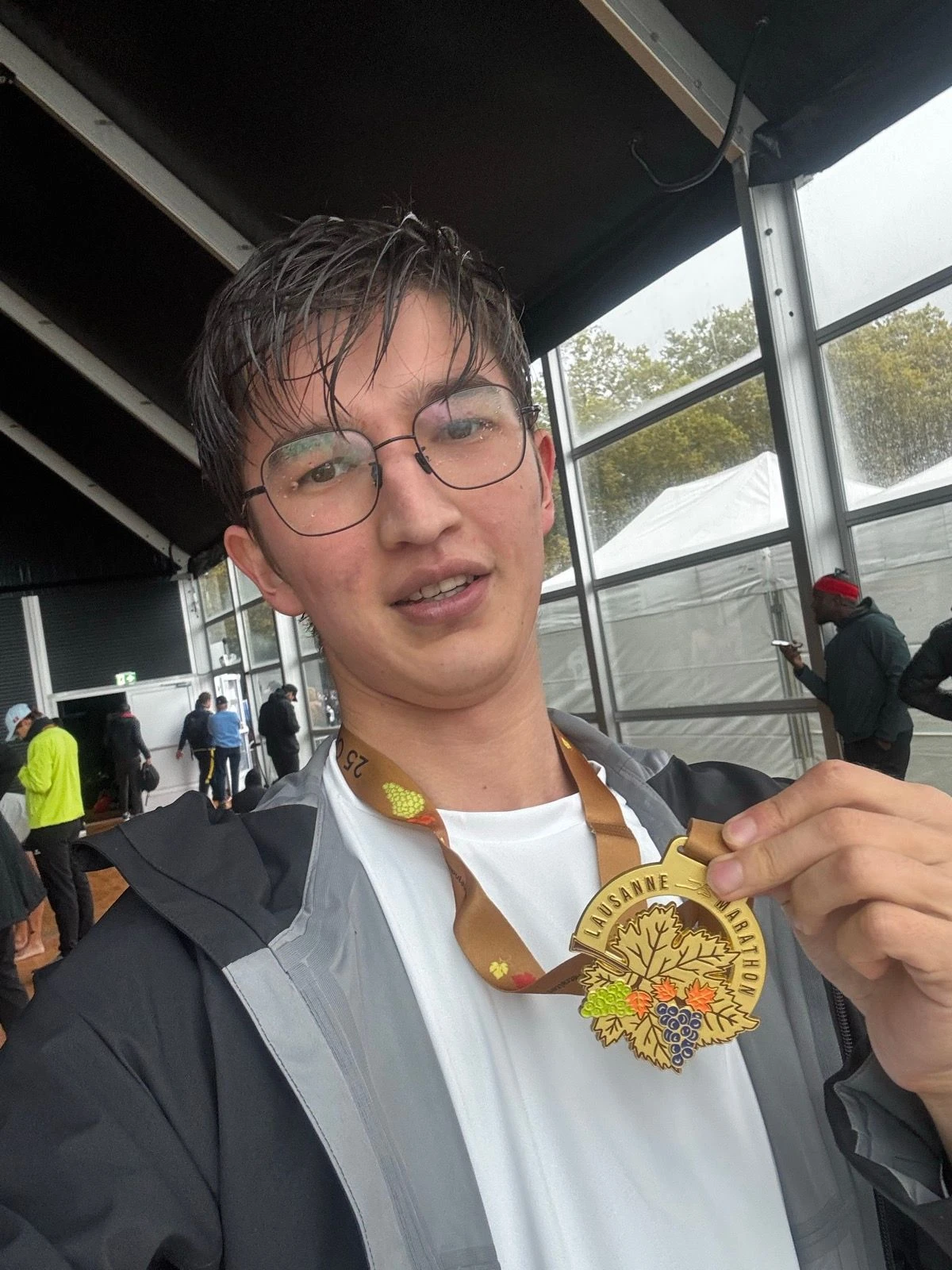
In the study abroad perspective I believe I am yet to receive such reward (if there's any), though for now I'm happy that I'm on the path of achieving the initial goal I had - to prove to myself that I could do the whole thing. Really though, I used to joke to my family saying 'If you put me inside a random forest I can survive there' - what I'm doing is nothing more than proving that point in different ways. Now that I talk about proof, another advice I really want to use myself (and also give it out) is that you need to very good at the things you do, you need to collect proofs that you are good at it - collect them and be ready to list them out so that nobody will be able to prove it otherwise.
TLDR
Being away from home is like going for a run. I went for a run wanting to win, thought of giving up mid-way, kept going through the middle, got angry on not getting what was promised yet still kept going, and finally happy about the reward from the run. You need to go out of your comfort zone to grow. You need a push to go out of your comfort zone. For now: just go for a run.